
Douglas County Criminal Court Cases
Illinois Circuit Court has original trial jurisdiction, and Douglas County belongs to the Sixth Judicial Circuit. One local circuit structure handles felonies, misdemeanors, traffic matters, and ordinance cases. Tuscola, Arcola, and Villa Grove do not advertise separate municipal-court databases. City police may start a matter through an arrest, citation, or report, but a filed prosecution moves into circuit court.
The Douglas County Circuit Clerk keeps the docket, pleadings, orders, judgments, financial entries, and sentencing documents. The State's Attorney decides what charges to file; the clerk records what follows. A police allegation is not the same document as a court charge, and neither proves conviction without a charge-level disposition.
Judici Searches for Douglas Cases
The judiciary links to the exact Douglas County Judici endpoint. It is the best online starting point for a local docket. Research access required a CAPTCHA, so the live field labels and full search inventory could not be verified without completing the human challenge. Do not import fields from another county's version.
The official interface below confirms the dedicated county route. Complete the CAPTCHA, then read the live form before entering data.
If the challenge repeats or no result appears, use the clerk fallback. A blocked search does not prove that no case exists.
Searching Douglas County Case Records
Use the most exact identifier available. A case number is safer than a common name. Check any name result against filing year, case type, charge details, and other public identifiers. The researched order is Judici, the Circuit Clerk, re:SearchIL for covered electronic documents, and a clerk request for older or non-online material.
- Open Douglas County's Judici endpoint and complete the human check.
- Enter a case number, or use a party name if the number is unknown.
- Compare the filing year and case type before choosing a match.
- Read each charge and event through its latest disposition.
- Request copies or certified documents from the Circuit Clerk when the docket lacks the needed filing.
| Field Label | Type | Required | Notes |
|---|---|---|---|
| Party name | Text | Check live form | Use spelling and aliases with care; never identify someone by name alone. |
| Case number | Text | Check live form | The strongest key when copied from a notice, citation, or filing. |
| Filing year | Filter | Check live form | Helps distinguish similar names and find an older docket. |
| Case type | Filter | Check live form | Separates criminal, traffic, and other circuit matters. |
| CAPTCHA | Human check | When shown | Complete it manually; the live labels were not harvested. |
Douglas County Court's Offline Fallback
The Douglas County Circuit Clerk serves the public at 401 South Center Street, Room 204, Tuscola, Illinois 61953. Listed weekday hours are 8:30 a.m. to 4:30 p.m. The office phone is 217-253-2352, and its email is circuitclerk@douglascountyil.gov. A public kiosk is available in Room 204.
Readers may use the counter, phone, email, or mail. Give the case number, party, approximate year, and exact document sought. Ask if electronic delivery is possible and whether certification is needed. Current local copy and certification fees were not found in official sources, so confirm the cost with the clerk. Call before travel when an older volume or certified item is needed.
The courthouse also lists free rear and street parking, Dial-A-Ride at 217-639-5169, a copier, printer, internet access, law library, and self-help center. A Spanish interpreter is available monthly, and criminal or traffic interpreter requests route through the State's Attorney at 217-253-5471. ADA questions go to coordinator Katy Patient at katherine.patient@douglascountyil.gov. Mobile devices remain subject to local court policy, so permission to carry a phone does not permit courtroom photography or recording.
Inside a Douglas County Case File
A circuit file is a record of prosecution, not one summary sheet. Its docket is a dated list of events. Filed records may include a complaint, prosecutor's information, or indictment, followed by notices, motions, orders, plea papers, judgment, and sentencing entries. Online coverage varies, while sealed or restricted content does not appear like an ordinary public file.
| Case Number & Court | The clerk's identifier and the court where the prosecution is filed. |
|---|---|
| Charging Document | The complaint, information, or indictment stating the formal allegations. |
| Docket Entries | A chronological list of filings, hearings, orders, and court events. |
| Hearing Dates | Past and scheduled appearances, subject to later court changes. |
| Disposition & Judgment | The outcome for each charge, such as dismissal, acquittal, plea, or verdict. |
| Sentence & Conditions | Court terms after conviction, such as custody, supervision, fines, or restitution. |
re:SearchIL and Douglas Court Coverage
The re:SearchIL court-document search is a statewide repository for covered electronic documents. It is not a promise that every Douglas filing or full docket appears there.
Use it as a second online channel. For a missing Douglas document, return to the clerk in Room 204.
How a Douglas Criminal Case Moves
A Douglas matter may begin with arrest or summons. An initial appearance and release decision can follow. The prosecutor files a complaint or information, or seeks an indictment. Arraignment addresses the charge and plea. Discovery and pretrial motions come next, followed by a plea or trial. Judgment and sentence close the trial phase, though post-judgment proceedings or appeal may continue.
Case flow: Arrest or summons › Initial appearance › Filed charge › Arraignment › Pretrial proceedings › Plea or trial › Judgment › Sentence › Appeal
Each stage can create a new docket entry or filed document. The first charge may be amended, dismissed, or replaced before judgment. Release conditions can change after a hearing. Read the docket in date order, then obtain the order or judgment that controls the current status. A booking label is only a custody snapshot. It cannot show whether the State's Attorney filed that charge, whether a judge ruled on it, or what sentence was entered.
The State's Attorney works from Room 105 in the same courthouse and decides which eligible charges to prosecute. That office is not the keeper of the clerk's full docket or every police report. The Public Defender is on the third floor and serves eligible appointed clients, not general record requests. These nearby offices have different roles. Direct a filing or certified judgment to the clerk, an incident narrative to the creating police agency, and a prosecution decision question to the proper case professional.
Read Douglas Dispositions Charge by Charge
Disposition means outcome. One count may be dismissed while another ends in a guilty plea. Acquittal is a not-guilty verdict. Dismissal means the charge ended without conviction. Nolle prosequi means the prosecutor declined to proceed. None should be recast as a conviction.
The ISP fee schedule explains state criminal-history products. The official page below concerns ISP records, not court copy fees.
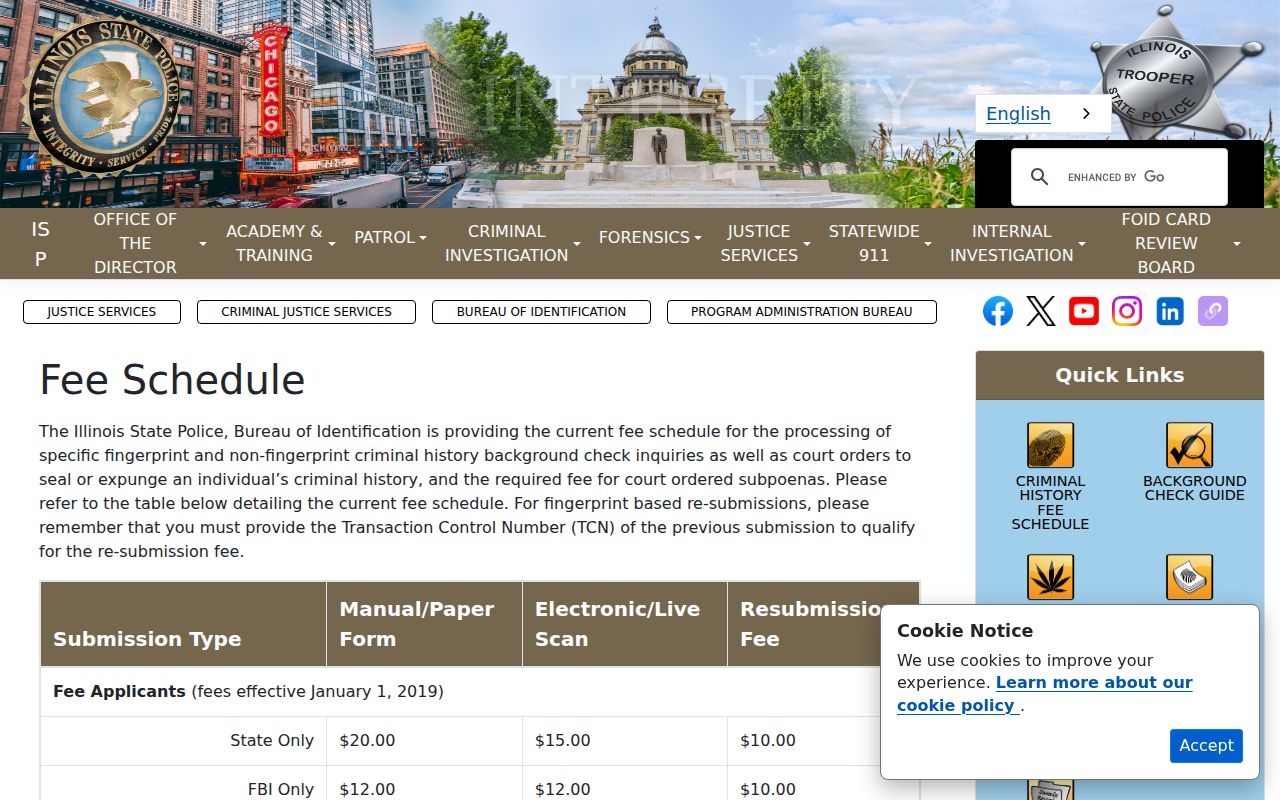
CHIRP conviction information may omit pending charges, dismissals, and local reports. Match it to the clerk's charge-level outcome.
Challenge Your Own Illinois Record
For a personal Illinois transcript, use ISP Access and Review. An Illinois-licensed live-scan vendor or law-enforcement or correctional facility captures fingerprints and sends them to the Bureau of Identification. ISP charges no Access and Review fee, though a private capture vendor may charge.
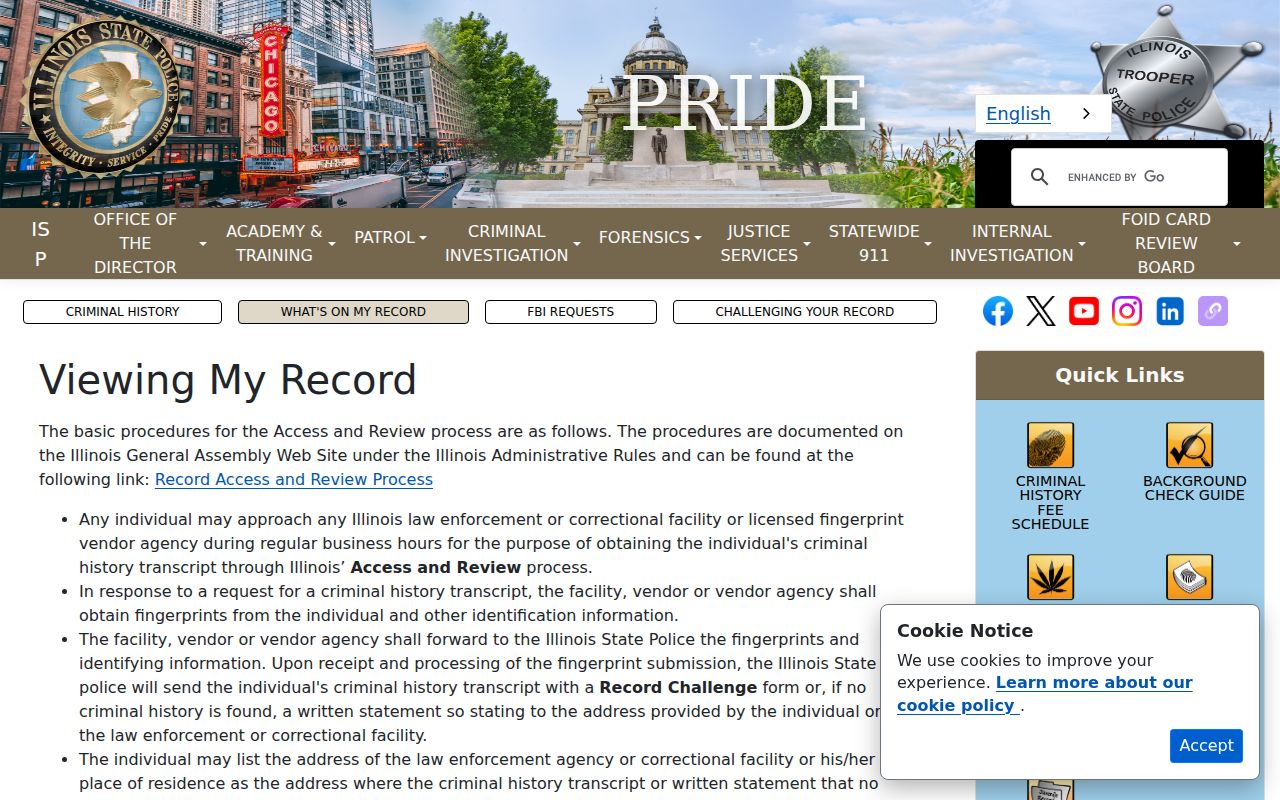
The response provides a Record Challenge process. A certified Douglas disposition can support correction of a missing or wrong state outcome.
Douglas Federal Cases Use PACER
Federal matters from Douglas County belong to the U.S. District Court for the Central District of Illinois, Urbana Division. They are not Douglas Circuit Court cases. PACER supplies federal dockets and documents under its account and fee rules.
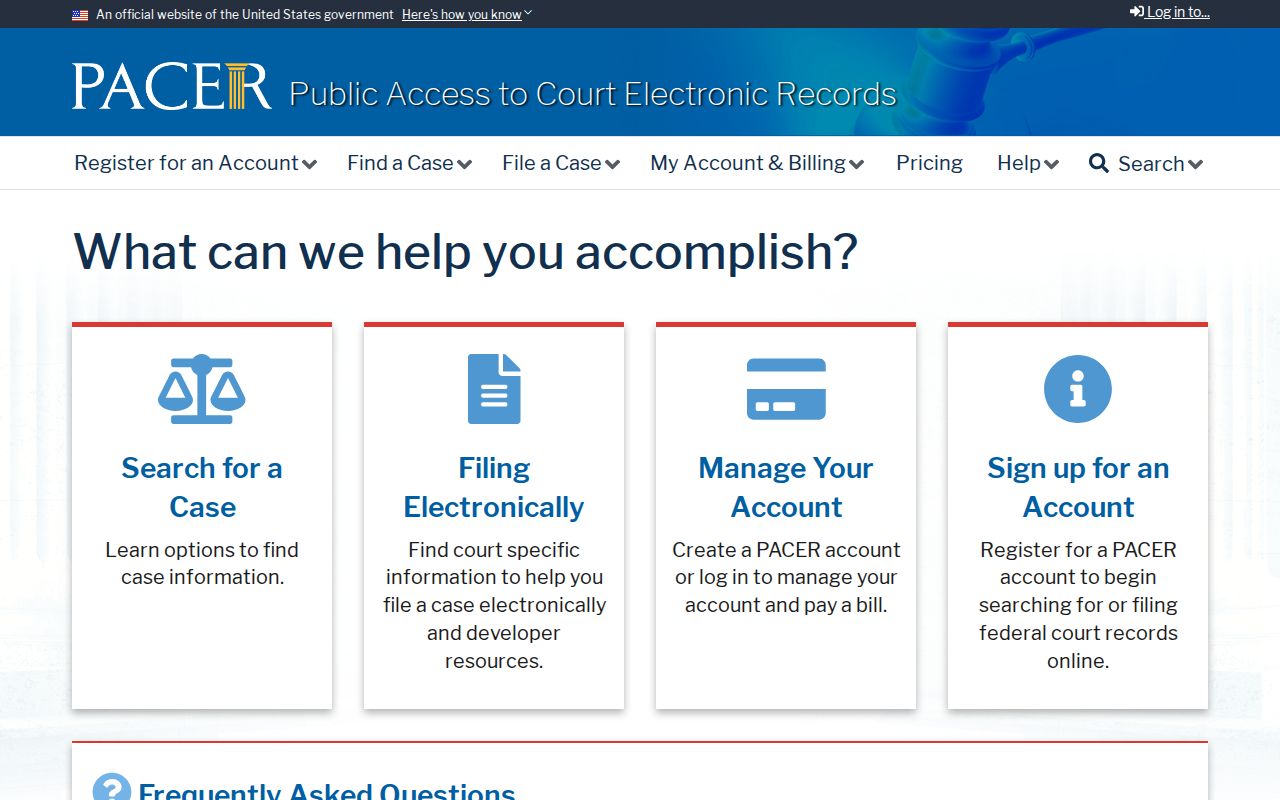
Use the federal clerk's public-access service when needed. Do not merge a federal result with a local circuit search.
Case Record Access & Restrictions
Public access does not mean every line is open. Juvenile records, sealed or expunged matters, victim and minor identifiers, medical information, and other protected content may be withheld or redacted. Online access can also be narrower than the file kept by the clerk. Ask if a case exists and whether a public portion can be supplied.
Illinois FOIA does not defeat a sealing order or court-record rule. A missing result may reflect restricted access, thin online coverage, an old file, or a spelling difference. When certified proof is needed, request it from the Circuit Clerk rather than printing a web result.
Tuscola, Arcola, and Villa Grove may create police reports, citations, and ordinance records, but they do not publish separate municipal-court databases. Filed traffic, ordinance, misdemeanor, and felony matters use Judici or the Douglas County Circuit Clerk. Certification also follows the custodian. Police certify their own releasable incident records, while the clerk certifies court filings. A portal printout can locate a case but is not automatically a certified court copy.